Oliver Atkin was a Fellow at the Laboratory from 1964 to 1970 although he spent some time in the USA during that period.
In September, 1995, the University of Illinois at Chicago held a conference in honor of his retirement. The papers covered a range of topics including algebraic number theory, p-adic modular forms, and modular curves. Many of the presentations reflected Oliver's particular interest in computational and algorithmic questions. One presentation was Atkin and Atlas Lab by B.Birch. The papers appeared in Computational Perspectives on Number Theory published in 1998 (ISBN: 0-8218-0880-x)
Some of the papers that he produced while at the Laboratory were:
Dr. Oliver Atkin, a Cambridge-educated mathematician and professor emeritus at the University of Illinois at Chicago, was equally at home sitting at a computer to solve math problems as he was behind a church organ.
"He was a genius at using the computer in the theory of numbers," said Bruce Berndt, professor of mathematics at the University of Illinois at Urbana-Champaign. "There isn't anyone better at using the computer finding examples for the partition function."
Dr. Atkin also played organ for Grace Episcopal Church in Oak Park, St. Paul's Episcopal Church in Riverside and was past music director at Broadway United Methodist Church in Chicago.
"Music and math went hand in hand for him," said his daughter, Henrietta.
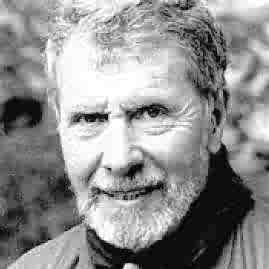
Dr. Atkin, 83 of Oak Park, died Sunday, Dec. 28, in Loyola University Medical Center in Maywood of complications from a fall in his home on Dec. 23.
"He was one of the first mathematicians [who] started using computers to do research in pure math," said Winnie Li, a colleague. "He had many interesting conjunctures."
Dr. Atkin and fellow mathematician Joseph Lehner came up with module form, which was an important development in helping Andrew Wiles prove Fermat's Last Theorem, Li said.
"What Atkin and Lehner did was the foundation. They came up with the structure so it was important later to prove theory that was open for more than 300 years," Li said.
Born in Liverpool, England, Dr. Atkin at age 11 won a scholarship to Winchester College, said his son, William. He went to the University of Cambridge, where he was a major scholar in 1942.
In 1944, he signed up for national service in Britain but was told his math expertise was needed more at government communication headquarters, where he was among 5,000 mathematicians and linguists that broke 4,000 Nazi codes a day, his son said.
After the war, Dr. Atkin served the remainder of his national service time at the National Physics Laboratory doing research on wing design for supersonic aircraft.
He returned to Cambridge in 1947 and completed a doctorate in mathematics in 1952. In 1959 he married his wife, Raynor.
In England he worked at Atlas Computer Laboratory and mastered techniques for programming the computer there, said his daughter.
In the 1960s he had research sabbaticals at the University of Maryland and the University of Wisconsin but came to the U.S. permanently in 1970. That year his wife died, leaving him to raise two young children.
He taught at the University of Arizona and Brown University before joining the University of Illinois at Chicago Circle in 1972.
Dr. Atkin was known for the Schoof-Elkies-Atkin algorithm used in cryptography, said his son.
Dr. Atkin received the National Science Foundation grant award for special creativity, the first time it was awarded for algebra.
Other survivors include five grandchildren.